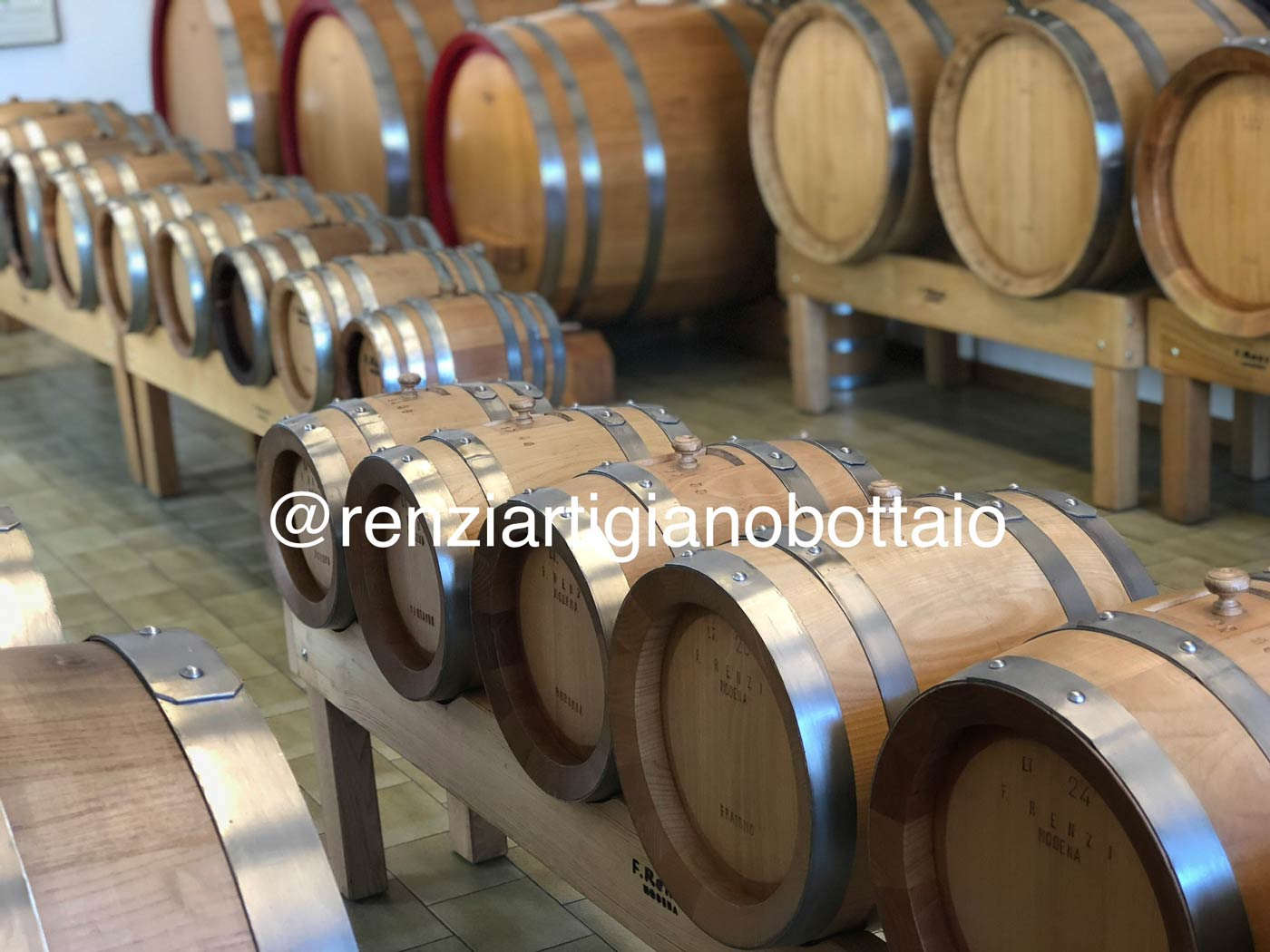
A guide to purchasing barrels for aging balsamic vinegar, wine, and spirits.
Not all barrels are built the same; an experienced cooper should advise the customer, listing the construction characteristics and type of wood seasoning, the stave bending technique, and the thicknesses at the head and belly of the barrel—these are just a few specifications.
Balsamic Barrels
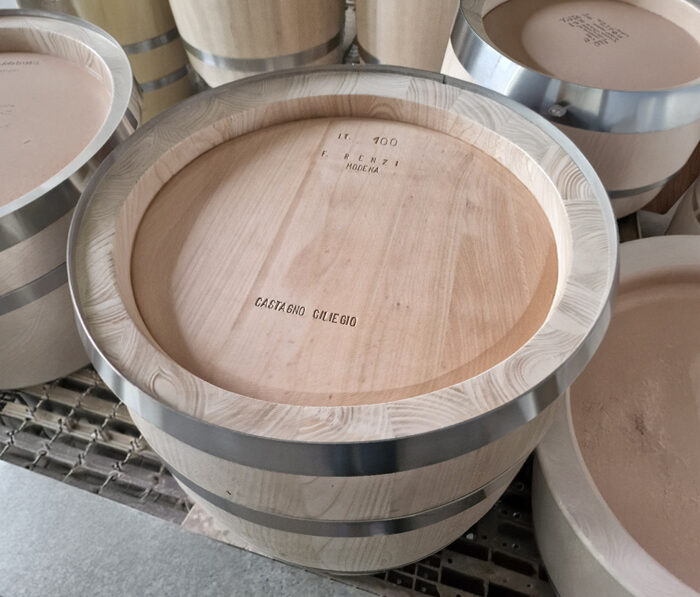
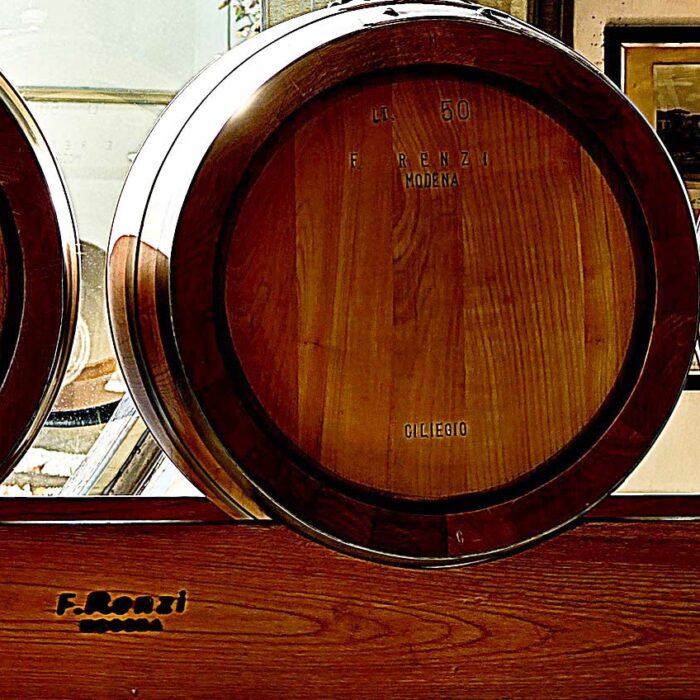
Typically, to produce and age balsamic vinegar, a series of high-quality barrels or sets of barrels are used to withstand the natural stresses that will undoubtedly affect the barrels over time. These barrels are built in increasing capacity and, if possible, using different types of wood, so as to give the balsamic vinegar character and a richer aroma and flavor. The most commonly used woods are oak, chestnut, Robinia (Acacia), ash, cherry, and the rare mulberry.
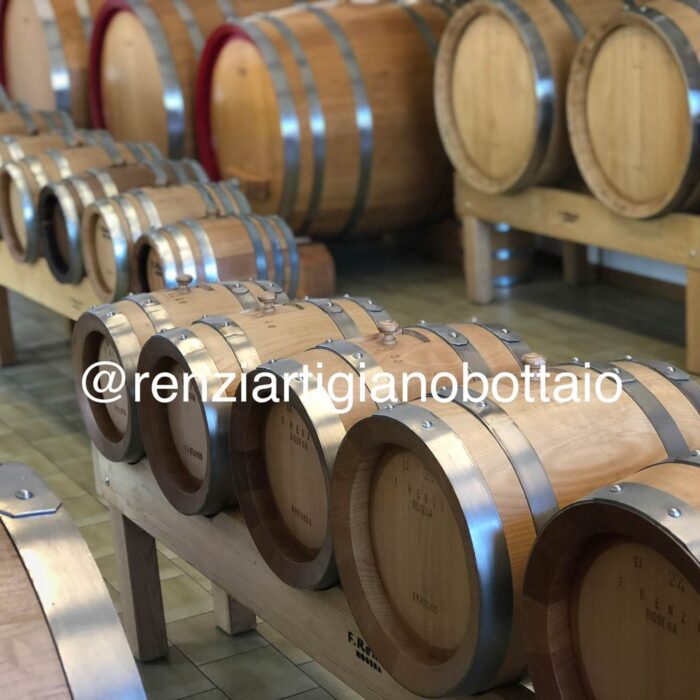
Renzi, the artisan cooper, recommends a minimum of 10-liter barrels, and the Top Series or battery has capacities of 10, 13, 16, 20, 24, 30, 40, 50, 60, 75, 85, and 100 liters. This scale includes 12 barrels. A sequence of 5 or 6 barrels will obviously be sufficient for good production. The number of barrels in the Series or battery is always subjective, and the sequence of woods may also be subjective.
The barrels’ hoops can be made of iron, galvanized iron, or a much higher-quality stainless steel, (TOP SERIES BARRELS) to resist acetic corrosion over time.
Wine Barrels
Wine barrels for aging are usually made of Slavonian or French oak; in some more specific cases, Acacia is used.
Capacity can obviously vary from a few liters (10-35 liters for more domestic use), to capacities of 50 or 100, and the more classic 225 liters.
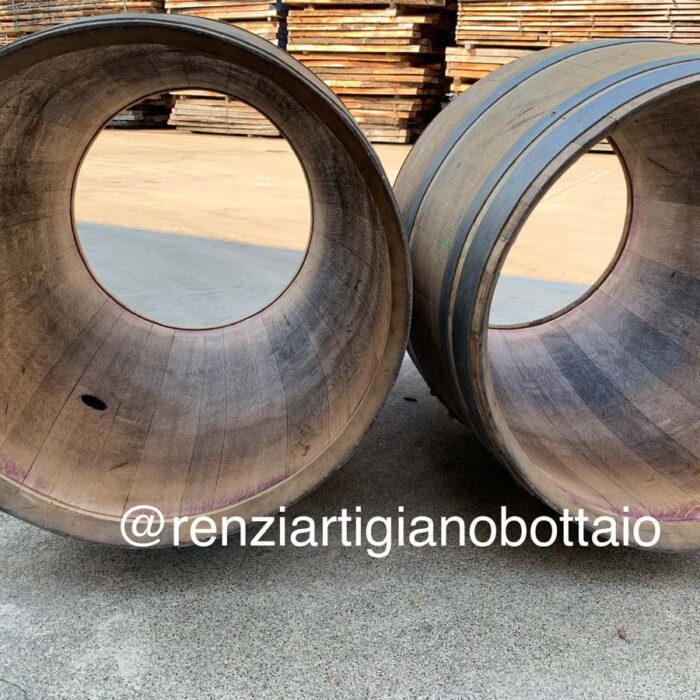
5-, 7-, or 10-hectoliter barrels are usually classic barrels with a wooden door at the bottom.
Large barrels are defined as 15-20 hectoliters and up.
The staves can be fire-bent and toasted, or water-bent and untoasted.
The hoops can be made of galvanized iron or stainless steel (Top Series barrels) for significantly better corrosion resistance over time.
Barrels for Distillates
Barrels are available for refining various types of distillates. The woods available vary, from classic oak or Robinia (Acacia), to sweet and fragrant cherry barrels, not forgetting the ash barrel, which is best suited for white spirits where a noticeable wood impression is desired.
Sizes vary depending on the intended use. For domestic use, the most common liter sizes are 10, 13, and 16 liter barrels, while for distilleries, the liter sizes can range from 50-100 to 225 liters on average, up to oak barrels of 10 hectoliters and beyond.
As with wine barrels, the choice of fire-bent and toasted staves, or water-bent staves, is a highly personal choice for different needs.
If you’d like more information and a mini consultation on the Guide to Buying Barrels for Aging Balsamic Vinegar, Wine, and Spirits, contact @renziartigianobottaio